

Stongyloides egg ready to hatch in goat feces using a McMaster slide with flotation solution. It is not common that one finds a worm egg very close on being ready to hatch in goat or animal feces, but this can vary depending the volume of fecal slides one does and the age of the feces plus the storage time before it get’s under a microscope to be examined. Storage temperature can also play a part in this.
Usually when doing fecal samples with egg counts one does not come across this as most of the time I am doing fresh samples, therefore I thought it would be good to video it with the microscope.
For those who don’t know to do proper fecal worm counts we use a special type of slide that has a space in between where we place the sample in solution.
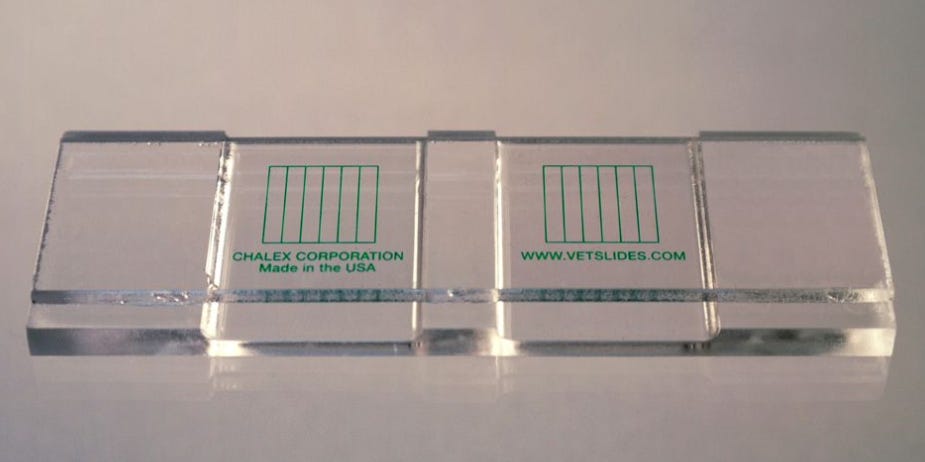
How this works is one fills the slide with solution like this then we put it under a microscope and count the number of worm eggs of different types in each row on each side then work out the worm count.
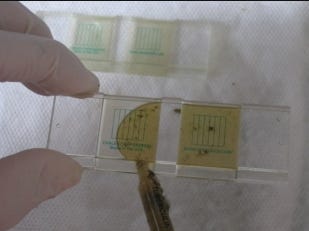
There are tutorials online for those interested in doing this themselves with livestock. Something that is handy for the person who is self taught is that there are microscopy groups on the likes of Facebook where they can send and share their pictures of this type of microscopy if they are unsure about what type of worm egg they are looking at.
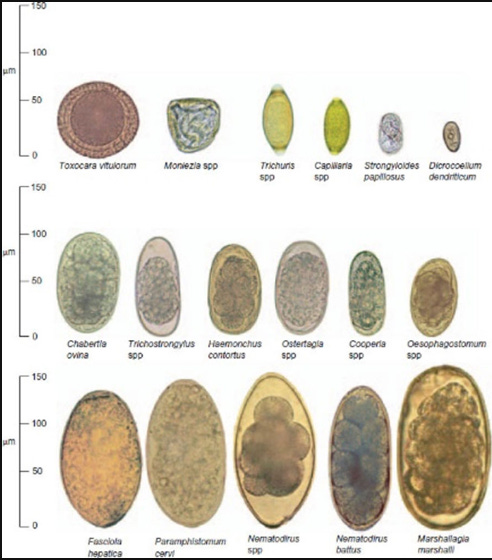
Depending on the animal the worm egg types change in structure, color and size under the microscope. Here is a small example of the worm eggs and their sizes found in the likes of small ruminants for those interested. We also find many other things like Coccidia which is a protozoan and it is found at a different focal level in the slide they tend to float lower in the solution on the slide and they are much smaller. The structure of the egg is different as well.
Also when looking at the eggs one has to consider at which stage of maturation the egg is at as it can look quite different depending on it’s level of maturity.
Why do we do worm counts?
We do worm counts instead of worming the animals on a schedule basis even when they don’t need it ie one size fits all approach. Some of us selectively worm each animal based on their worm count. This is suitable for small farm holdings and the reasoning behind this approach is that in some areas they are running into worm resistance to wormers.
In essence some holistic small holders ie small micro farmers prefer to only ever worm if the worm count goes above a certain level ie number of worms.
So basically what is happening is that due to over worming some species of worms are becoming resistant to wormers and this is a big worry. I prefer to work on diet, minerals and paddock rotation to manage worms instead of chemical wormers. It is way better for the animal, also the land and the environment.
Note: Worm types ie species can be very different from Country to Country and even areas within each Country.

